
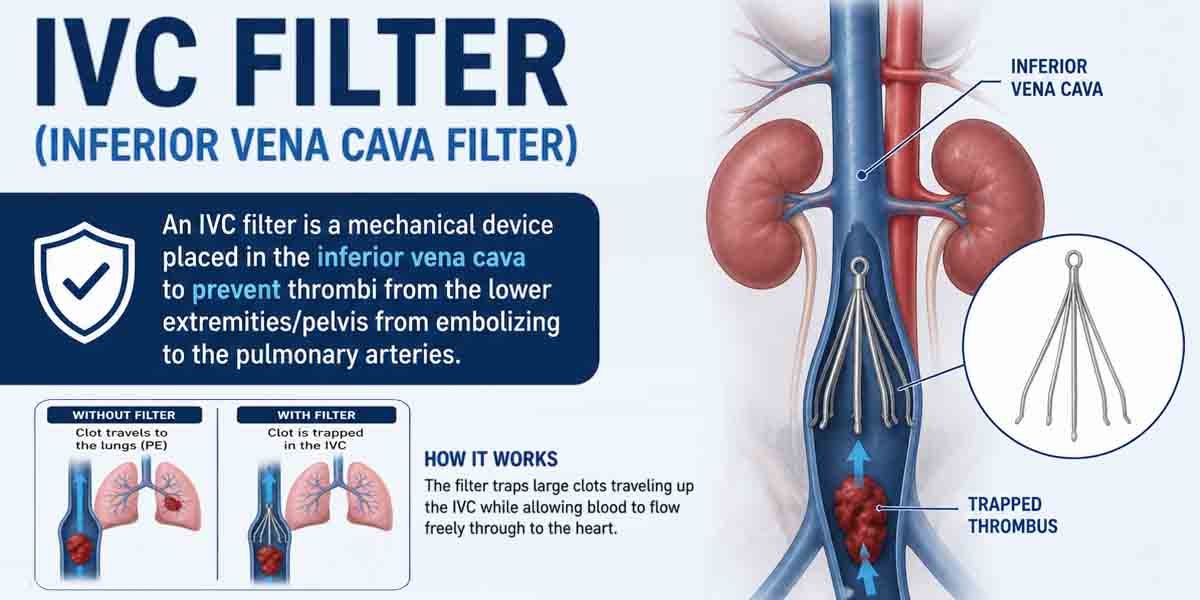
Pulmonary embolism (PE) is a potentially life-threatening condition caused by blood clots traveling to the lungs, most commonly from deep veins in the legs. While anticoagulation remains the primary treatment, certain high-risk situations demand alternative strategies. This case highlights the critical role of an Inferior Vena Cava (IVC) filter in preventing fatal complications.
The standard treatment for DVT and PE is anticoagulation. In this case:
This created a critical need for an alternative, life-saving intervention.
After multidisciplinary evaluation, the team led by Dr. Ashish Agarwal, Cardiologist in Dwarka, decided to place an Inferior Vena Cava (IVC) Filter.
The procedure was performed successfully without complications.
The IVC filter served as a temporary yet crucial safeguard, preventing a potentially fatal outcome.
IVC filters are not routinely recommended but play a vital role in select high-risk cases, such as:
This case reinforces the importance of personalized, evidence-based decision-making in cardiology practice.
This case demonstrates how advanced interventional strategies, when used appropriately, can prevent life-threatening complications. Under expert care, patients with complex conditions can achieve safe and effective outcomes.
If you are looking for expert management of heart and vascular conditions, consult Dr. Ashish Agarwal – leading cardiologist in Dwarka, for personalized and advanced cardiac care.
Schedule a consultation with our experienced cardiologist and take the first
step towards a healthier, stronger you.
Copyright © 2025 Dr. Ashish Agarwal | All Rights Reserved
 The Story Door