
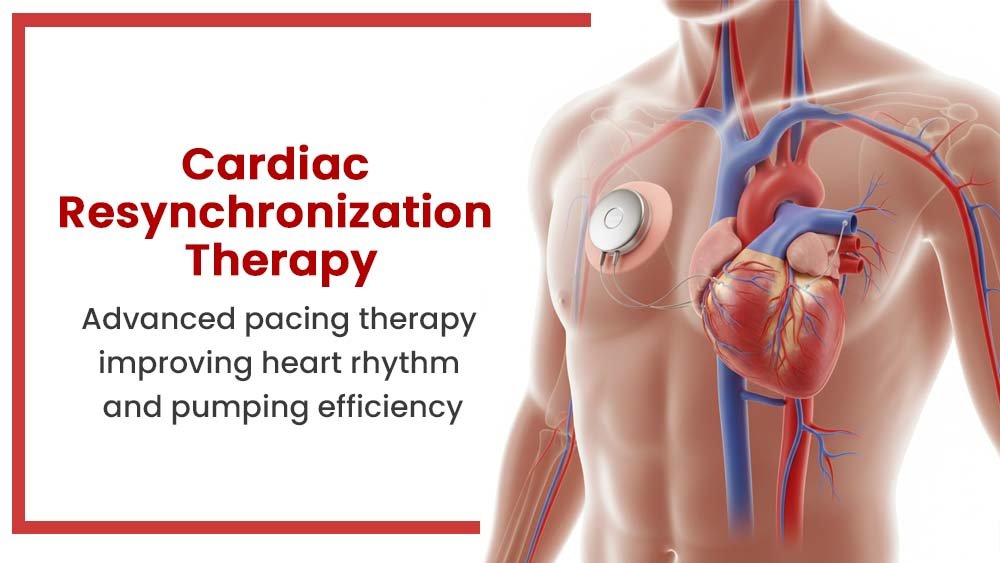
Cardiac Resynchronization Therapy (CRT) is an advanced pacing treatment designed for selected patients with chronic heart failure who also have abnormal electrical activation of the heart. In such patients, different parts of the heart do not beat together in a coordinated way, leading to inefficient pumping and worsening heart failure symptoms.
CRT works by restoring the synchrony between the right and left ventricles, allowing the heart to pump blood more effectively and improving overall cardiac performance.
CRT uses a specialized pacemaker system that delivers electrical impulses to both ventricles at the same time, a technique known as biventricular pacing.
 One pacing lead is placed in the right ventricle
Another lead is positioned on the left ventricle through
a vein called the coronary sinus
By pacing both sides together, CRT helps the left ventricle contract in a more coordinated and efficient manner, improving blood circulation to the body and reducing strain on the heart.
CRT is most effective in carefully selected heart failure patients who meet specific clinical criteria, known as classic indications:
Heart failure with reduced ejection fraction
(HFrEF), where LVEF is 35% or less, despite optimal medical treatment
Wide QRS duration (≥130 milliseconds) on ECG,
especially patients with Left Bundle Branch Block (LBBB)
NYHA Class II to IV (ambulatory) symptoms, such as
breathlessness, fatigue, or reduced exercise capacity
Sinus rhythm, where the strongest evidence of
benefit exists.
Selected patients with atrial fibrillation (AF)
may also benefit, particularly when a high percentage of effective biventricular pacing can be achieved.
Depending on the patient’s risk profile and need for protection against life-threatening arrhythmias, two types of CRT devices are available:
Provides resynchronization pacing alone, suitable for patients without a strong indication for a defibrillator.
Combines resynchronization therapy with an implantable cardioverter-defibrillator (ICD) to treat dangerous heart rhythms and reduce the risk of sudden cardiac death.
In appropriately selected patients, CRT offers multiple proven benefits:
Improvement in left ventricular ejection fraction (LVEF)
Reduction in left ventricular size and volumes, leading
to reverse cardiac remodeling
Significant reduction in heart failure hospitalizations
Lower overall mortality, especially in patients with LBBB
and QRS duration ≥150 ms
Better exercise tolerance, reduced symptoms, and improved
quality of life.
Many patients experience noticeable improvement in daily activities, energy levels, and breathing after CRT implantation.
Despite careful patient selection, approximately 30% of patients may not show a significant clinical response to conventional CRT. Reasons may include:
Suboptimal lead positioning
Scar tissue in the left ventricle
Non-LBBB conduction patterns
Advanced structural heart disease
These patients are often referred to as CRT non-responders and may benefit from newer pacing strategies.
With advances in pacing technology, newer methods are increasingly being used to improve response rates and outcomes:
Conduction system pacing-based CRT
His Bundle Pacing (HBP) – directly stimulates the natural
His-Purkinje system
Left Bundle Branch Area Pacing (LBBAP) – targets the left
bundle branch for more physiological activation
These techniques are especially useful in patients with difficult coronary sinus anatomy or those who do not respond adequately to conventional biventricular CRT. They are emerging as promising alternatives in modern heart failure management.
Schedule a consultation with our experienced cardiologist and take the first
step towards a healthier, stronger you.
Copyright © 2025 Dr. Ashish Agarwal | All Rights Reserved
 The Story Door